

Prediction of Immunotherapy Response in Melanoma using Neo-Antigen Load, Transcriptomic Profiles and Machine learning
- Authors
-
-
Israa M Shamkh
Chief Computational Chemistry Department EBO Bio Solution Company, London, EC1V2NX, United KingdomAuthor -
Ahmed Helmy
Department of Biotechnology, Faculty of Agriculture, Ain Shams University, Cairo, Egypt. RH-G1002 Lab Department Of Cheminformatics EBO Bio Solution London United KingdomAuthor
-
- Keywords:
- Melanoma , immunotherapy, neo-antigens, transcriptomics, autoencoders, machine learning, prediction
- Abstract
-
Prostate cancer continues to represent a major clinical challenge, particularly in its advanced and castration-resistant stages, where therapeutic resistance and pathway redundancies hinder the effectiveness of single-target therapies. This study presents a comprehensive in silico drug discovery framework employing computational multi-target design strategies to identify novel inhibitors that can disrupt key oncogenic and regulatory proteins involved in prostate cancer progression. A total of 20 proteins were selected across multiple signaling pathways, including PI3K/AKT/mTOR, MAPK/ERK, Androgen Receptor (AR), p53, and RB/E2F, based on their established roles in tumor proliferation, survival, metastasis, and therapy resistance. The computational pipeline integrated protein structure modeling, virtual screening, molecular docking, and binding affinity evaluation. A large, diverse compound library comprising natural phytochemicals, marine-derived agents, and synthetic molecules was screened for potential multi-protein modulators. Each protein-ligand interaction was assessed for specificity, selectivity, and stability, with several promising candidates identified for targets such as AR, AKT1, PTEN, p53, and mTOR. This entirely in silico study demonstrates the power of computational drug design in accelerating the identification of multi-target inhibitors with high therapeutic potential. While no laboratory or clinical experiments were conducted at this stage, the results lay a strong foundation for future in vitro and in vivo investigations. Ultimately, this strategy opens new avenues toward the development of more effective, multi-targeted therapeutics for advanced prostate cancer.
- Cover Image
-
- Downloads
- Published
- 2025-07-21
- Conference Proceedings Volume
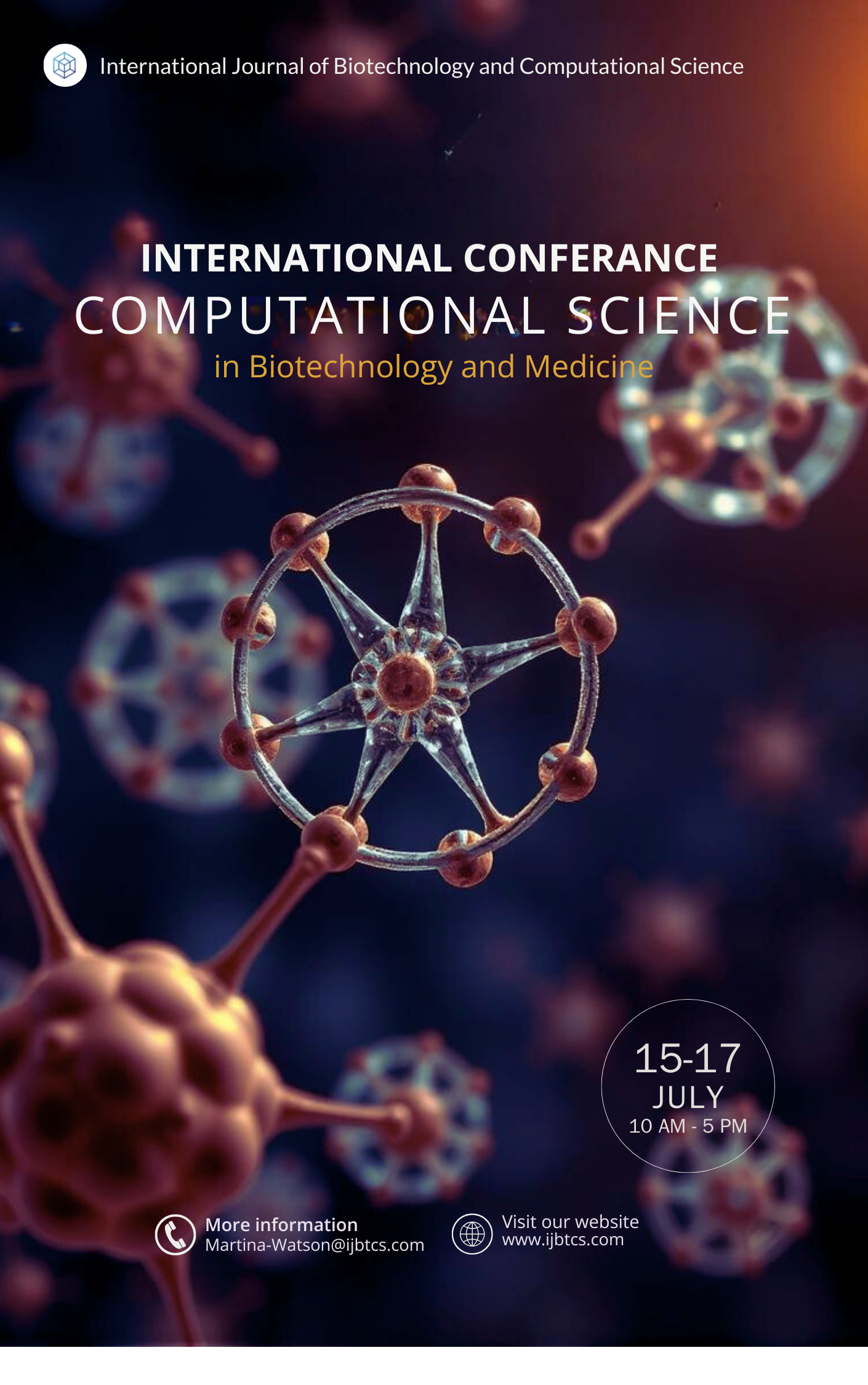
- Vol. 1 No. 1 (2025): International Conference on Computational Science in Biotechnology and Medicine
- Section
- Conference Abstract
- Categories
- License
-
Copyright (c) 2025 Israa M Shamkh, Ahmed Helmy (Author)

This work is licensed under a Creative Commons Attribution 4.0 International License.
This work is licensed under a Creative Commons Attribution 4.0 International License.
