
Development of Tools and Software Section
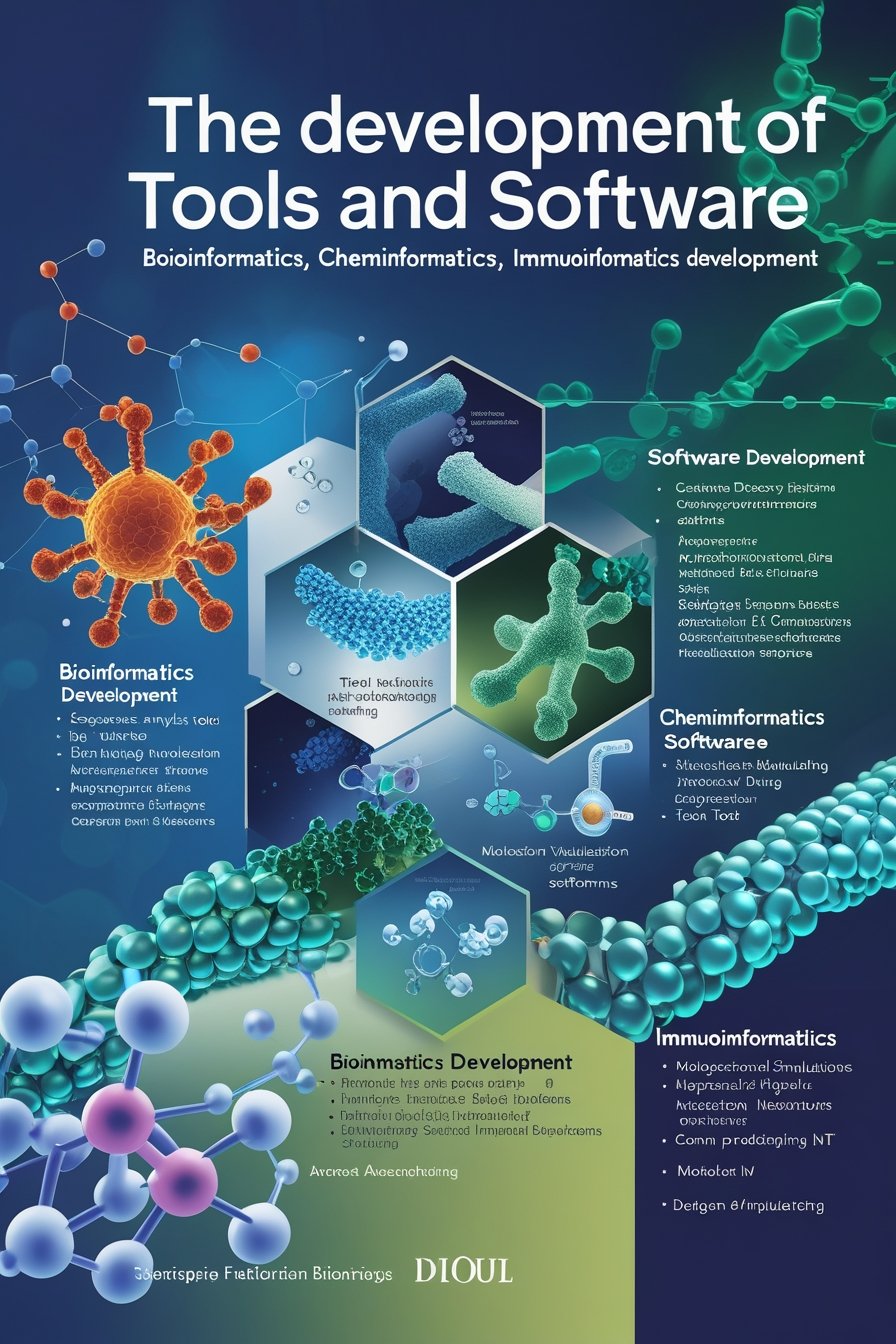
This section is dedicated to the development and enhancement of software tools and platforms tailored for bioinformatics and chemoinformatics. The goal is to create robust solutions that facilitate data analysis, improve the efficiency of scientific research, and make biological data more accessible to researchers across various fields.
We welcome researchers to submit their papers, books, and participate in related conferences to contribute to the advancements in this area.
3.1 Software Development for Bioinformatics
This area covers the development of software applications specifically designed for bioinformatics tasks. Key topics include:
-
Software for Sequence Analysis: Tools and algorithms for analyzing DNA, RNA, and protein sequences, including alignment, annotation, and interpretation of genomic data.
-
Data Visualization: Software that provides visual representations of biological data, such as gene expression profiles, protein structures, and molecular pathways, making complex data more interpretable and accessible.
-
Integrative Bioinformatics Tools: Platforms that integrate data from various sources (e.g., genomics, proteomics, metabolomics) to provide comprehensive insights into biological processes, enabling multi-omics analysis.
-
Platform Development for Biological Data Analysis: Creating integrated platforms that enable users to perform various bioinformatics analyses, from data processing to visualization, in a user-friendly environment.
3.2 Software Development for Chemoinformatics
This section focuses on the creation of tools for chemical data analysis, drug discovery, and molecular modeling. Topics include:
-
Drug Discovery Platforms: Development of software tools for identifying potential drug candidates, integrating chemical libraries and prediction algorithms to expedite the drug discovery process.
-
Molecular Docking Software: Tools that simulate the interaction between small molecules and biological targets, predicting binding affinity and optimizing the design of therapeutic agents.
-
Chemoinformatics Data Visualization Tools: Software designed to visualize chemical structures, molecular interactions, and pharmacological data, helping researchers understand complex chemical relationships.
-
Structure-Based Drug Design: Development of tools for designing drugs based on the 3D structure of biological targets, optimizing the interaction between the drug and its target to increase effectiveness and reduce side effects.
3.3 Databases in Bioinformatics
The development and management of bioinformatics databases are crucial for organizing and handling large-scale biological data. Key topics in this section include:
-
Creation and Management of Bioinformatics Databases: Designing and implementing databases that store biological data such as genomic sequences, protein structures, and pathway information, ensuring that the data is well-organized and accessible.
-
Data Mining: Techniques for extracting valuable insights from large biological datasets, using algorithms to identify patterns and relationships within the data.
-
Large-Scale Genomic/Proteomic Data Handling: Development of systems capable of handling vast amounts of genomic and proteomic data, providing tools for efficient storage, retrieval, and analysis.
-
Open-Source Bioinformatics Platforms: Creating open-source software platforms that promote collaboration and transparency in bioinformatics research, allowing the global scientific community to share and build upon each other’s work.
Call for Papers, Books, and Conference Participation
The International Journal of Biotechnology and Computational Science (IJBCS) is now accepting submissions in all the aforementioned categories. Whether you're working on new software tools, developing innovative platforms, or contributing to advancements in bioinformatics or chemoinformatics, we invite you to share your research with us.
-
Submit Your Papers: Contribute your original research and findings for publication in one of the journal's key sections.
-
Participate in Conferences: Stay tuned for upcoming conferences related to our journal's scope and get involved by presenting your research.
To submit your work, please follow the instructions provided on the submission page.