
Computational Science Section
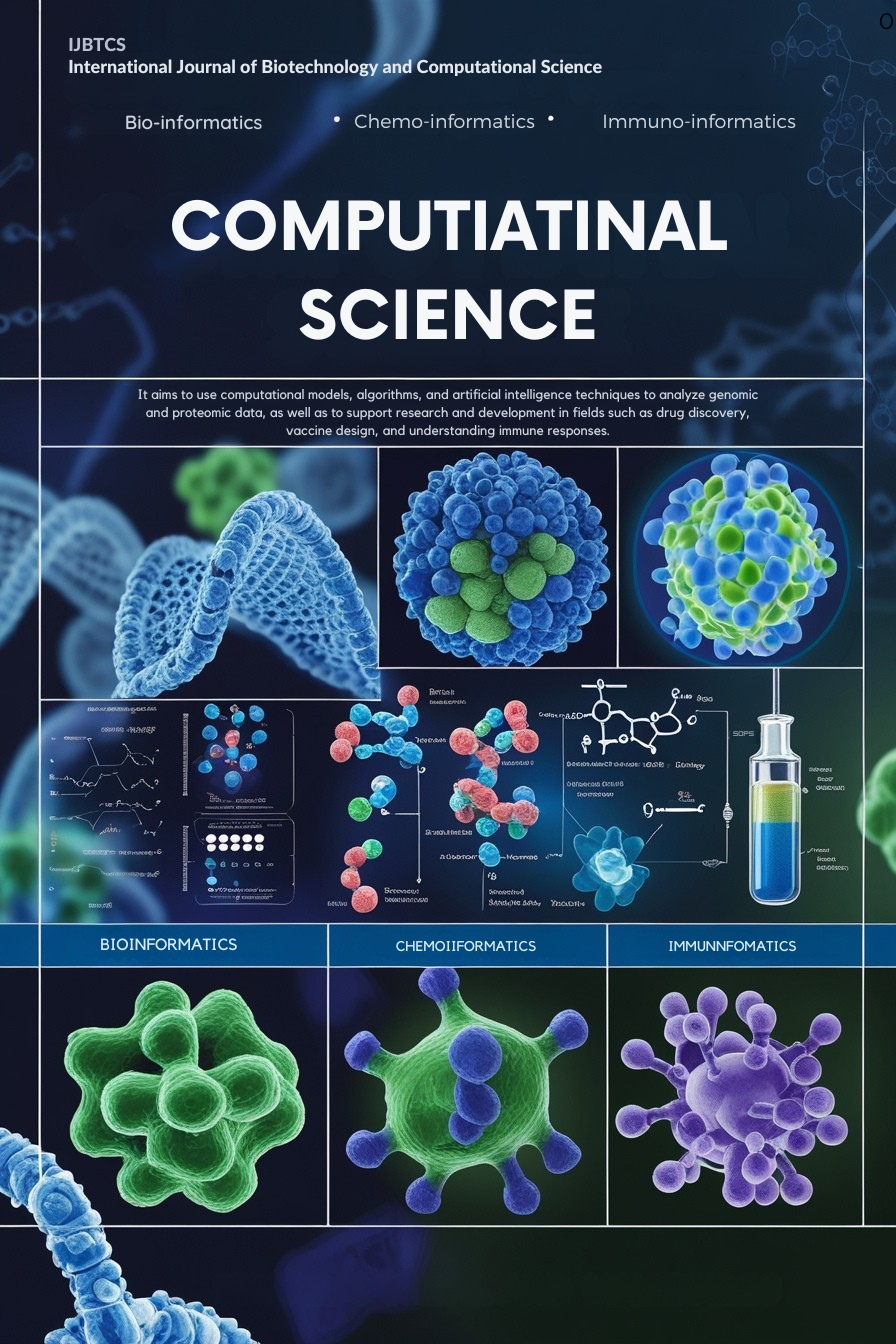
The Computational Science Section is a leading area in applying advanced technologies to analyze biological data. This section integrates multiple fields of computing and biology to explore and analyze biological information on a broad scale. It aims to use computational models, algorithms, and artificial intelligence techniques to analyze genomic and proteomic data, as well as to support research and development in fields such as drug discovery, vaccine design, and understanding immune responses.
We welcome research papers, books, and participation in conferences in the following areas:
2.1 Bioinformatics
This section focuses on Bioinformatics involves the study and analysis of biological data using computational tools. It focuses on the following areas:
-
Genomics: The analysis of genome sequences to understand genetic makeup and variation.
-
Transcriptomics: Study of the RNA molecules that are transcribed from the genome to understand gene expression.
-
Proteomics: The large-scale study of proteins, particularly with respect to their functions and structures.
-
Systems Biology: Understanding the complex interactions in biological systems through computational models.
-
Artificial Intelligence in Genomics: Using AI for tasks like sequence alignment, molecular phylogenetics, and evolutionary biology.
2.2 Chemoinformatics
This section focuses on Chemoinformatics is the application of computational methods to analyze chemical data and support drug development. It includes:
-
Drug Discovery: Using computational models to predict drug candidates and identify new therapeutic agents.
-
Molecular Docking: Simulation of the interaction between small molecules and biological targets to predict binding affinity.
-
QSAR (Quantitative Structure-Activity Relationship): A method for predicting the activity of chemical compounds based on their chemical structure.
-
Virtual Screening: Computationally screening large chemical libraries to identify potential drug candidates.
-
Chemical Databases and Molecular Modeling: Developing and using databases for chemical information and visualizing molecular structures.
2.3 Immunoinformatics
This section focuses on Immunoinformatics applies computational techniques to study the immune system and support vaccine development. It involves:
-
Antigen Prediction: Identifying potential antigens that could trigger an immune response.
-
Immune System Modeling: Using computational models to simulate the immune system’s behavior and responses.
-
T-cell and B-cell Epitope Mapping: Identifying regions of antigens that interact with T-cells and B-cells to stimulate immune responses.
-
Analysis of Immune Responses: Understanding how the immune system reacts to various stimuli, infections, and vaccines.
Call for Papers, Books, and Conference Participation
The International Journal of Biotechnology and Computational Science (IJBCS) invites submissions in the fields of computational science. Whether your research focuses on bioinformatics, chemoinformatics, or immunoinformatics, we encourage you to submit papers, books, and participate in upcoming conferences related to these fields.
-
Submit Your Papers: Contribute your research findings in bioinformatics, chemoinformatics, or immunoinformatics for publication.
-
Participate in Conferences: Join our conferences to present your research and network with experts in computational science and biotechnology.
To submit your work, please visit our submission page.